business resources
Unlocking Young Minds: Tips and Strategies for Teaching Kids How to Collect Information During Experiments
19 Mar 2023

As educators, one of our primary goals is to nurture curious minds and encourage children to explore the world through hands-on experiences. Experiments provide an excellent opportunity for young learners to observe, investigate, and discover new information.
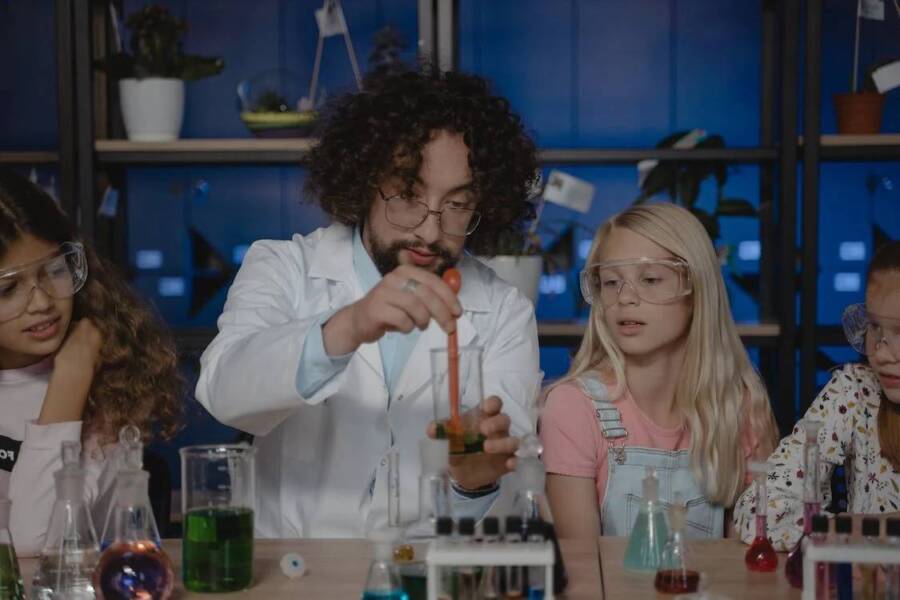
Teaching kids how to collect information during experiments is a crucial skill that not only enriches their scientific understanding but also enhances their critical thinking and problem-solving abilities. In this blog post, we'll explore valuable tips and strategies to help you guide your students in the art of gathering information effectively during experiments.
1. Set Clear Objectives
Before diving into any experiment, it's essential to establish clear objectives. Begin by discussing with your students what they aim to learn or discover through the experiment. You can create a table online at StoryboardThat and fill it out together with students. Setting specific goals helps children focus on what information they need to collect.
2. Use the Scientific Method
Introduce your students to the scientific method, a structured approach to conducting experiments. It consists of the following steps:
- Ask a Question: Encourage students to formulate a clear question or hypothesis related to the experiment's purpose.
- Research: Provide background information or resources to help students understand the context of their experiment.
- Plan and Predict: Assist them in designing a procedure and making predictions about the expected outcomes.
- Experiment: Guide them through the hands-on phase, emphasizing careful observation and data collection.
- Analyze Data: Teach them how to organize and analyze the information they've gathered.
- Draw Conclusions: Help students draw conclusions based on their data and evaluate whether their predictions were accurate.
- Communicate Results: Encourage them to share their findings through reports, presentations, or discussions.
Following the scientific method instills a structured approach to information collection.
3. Promote Observation Skills
Observation is a fundamental aspect of data collection during experiments. Train your students to be keen observers. Encourage them to use their senses to gather information – sight, sound, touch, smell, and even taste when appropriate. Provide observation sheets where they can record their observations systematically.
4. Document Everything
Stress the importance of detailed note-taking during experiments. Teach kids to maintain a lab notebook or journal where they record all the relevant information, including:
- Date and time: Ensure they record when the experiment was conducted.
- Materials and equipment: List the materials and tools used in the experiment.
- Procedure: Document the step-by-step procedure followed during the experiment.
- Observations: Encourage them to write down their observations and any changes they notice.
- Data: Teach them to record measurements and data accurately.
- Thoughts and questions: Encourage them to jot down any thoughts, questions, or ideas that arise during the experiment.
Emphasize the importance of documenting everything, no matter how small it may seem, as it can often lead to unexpected discoveries.
5. Use Visual Aids
Visual aids can be incredibly helpful for young learners. Incorporate drawings, diagrams, and charts to help them visualize their observations and data. Visual representations can make complex concepts more accessible and memorable.
6. Encourage Collaboration
Foster a collaborative learning environment where students work together on experiments. Encourage them to discuss their findings with peers, share observations, and compare results. Collaboration not only enhances their understanding but also teaches them valuable communication skills.
7. Safety First
Safety should always be a top priority during experiments. Teach kids about lab safety rules, the proper use of equipment, and the importance of following instructions carefully. Ensure they wear appropriate safety gear, such as gloves or goggles, when necessary.
8. Repeat and Validate
Reiterate the significance of repeating experiments to validate results. This process helps students verify the consistency of their findings and reinforces the scientific method's principles.
9. Reflect and Discuss
After each experiment, facilitate discussions where students reflect on their findings. Encourage them to share their thoughts on what they've learned, any challenges they faced, and how they might improve the experiment in the future. Critical thinking and self-assessment are essential skills for young scientists.
10. Real-World Application
Connect experiments to real-world applications. Help students understand how the information they collect in the lab can be applied in everyday life or in other scientific contexts. This bridges the gap between theory and practice, making learning more meaningful.
Incorporating these tips and strategies into your teaching approach can empower young minds to become effective and enthusiastic information collectors during experiments. As they develop these skills, students not only gain a deeper understanding of scientific concepts but also foster a lifelong love for exploration and discovery.