


business resources
The Symbolism Of The Magna Carta In Our Times Of AGI
Magna Carta, AGI, Artificial Intelligence, Digital Revolution
12 Sept 2024

The Magna Carta’s principles of shared power and justice remain relevant today, especially in the age of Artificial General Intelligence (AGI). How can the principles of justice, fairness, and shared power guide us to establish a fundamentally ‘smarter society’, while we face the challenges and opportunities of AI and AGI?
In the summer of 1215, a historic event occurred that left a lasting imprint on Western civilisation. The Magna Carta, a seminal document, was created to outline a vision for a more equitable society. This charter marked one of the earliest instances of a legal framework designed to protect individual rights and freedoms, establishing that even the king was subject to the law.
Fundamentally, the Magna Carta symbolised shared power and justice, laying the foundation for modern human rights and democratic governance.
As the people of England united behind the barons against King John, the Magna Carta began with a powerful declaration:
"John, by the grace of God King of England, Lord of Ireland, Duke of Normandy and Aquitaine and Count of Anjou, to his archbishops, bishops, abbots, earls, barons, justices, foresters, sheriffs, stewards, servants and all his officials and loyal subjects, greeting."
The Magna Carta, originally known as the Magna Carta Libertatum ("Great Charter of Freedoms"), is a symbol of shift in juridical and socio-economic power. The Charter, agreed upon by King John of England at Runnymede on 15 June 1215, was designed to reconcile the King with rebellious barons. It guaranteed the protection of church rights, shielded the barons from unlawful imprisonment, and imposed limits on feudal payments. This was overseen by a council of 25 barons, making it a solution to the social challenges of the era.
The Magna Carta: Legacy and Societal Influence
A revolution, the Magna Carta introduced the idea that power should not be concentrated solely in the hands of a ruler, but rather shared among a broader group of noblemen. Its main emphasis was on equality, protection, and justice, the very principles that have since inspired modern concepts of human rights.
The influence of the Magna Carta extended far beyond legal structures. It led to the formation of the English Parliament in 1215 and introduced ideas of equality and justice that continue to shape democratic governance globally.
The Magna Carta’s legacy can be seen in the modern concepts of leadership, trust, and accountability, especially in the realm of business. The actions of the feudal barons in securing the Magna Carta significantly improved social productivity and reshaped how business was conducted. This transformation in business principles laid the foundation for a more human-centred approach.
Today, these ideas find resonance in the concept of a “Smarter Society,” which advocates for a human-centred approach where technological advancements and social development coexist. A smarter society integrates physical and cyber spaces to address contemporary challenges, echoing the Magna Carta’s emphasis on protection and empowerment.
The Magna Carta remains a powerful symbol of liberty and justice, frequently cited by politicians and respected by legal communities in both Britain and the United States. Its creation over 800 years ago marked a significant breakthrough in envisioning a new societal narrative, one that valued rights, fairness, and collaboration.
The Magna Carta in the age of AGI
From the barons' struggle against King John in the 13th century to the modern world shaped by data and cloud computing, humanity has continually redefined what it means to be human!
As we integrate our biological, philosophical, and spiritual needs, we evolve. However, the stakes are now higher than ever. Technology has reached a stage of complexity that challenges the very essence of human experience. Whether humanity creates a utopia or dystopia depends on the narrative we build and the consciousness we bring to our actions.
As cities become the epicentres of global change, with more than half of the population now living in urban areas, it is expected that the urbanised population will be more than two-thirds by 2050. Cities are proactively working across borders to build coalition networks and resist socio-economic, financial and education policies.
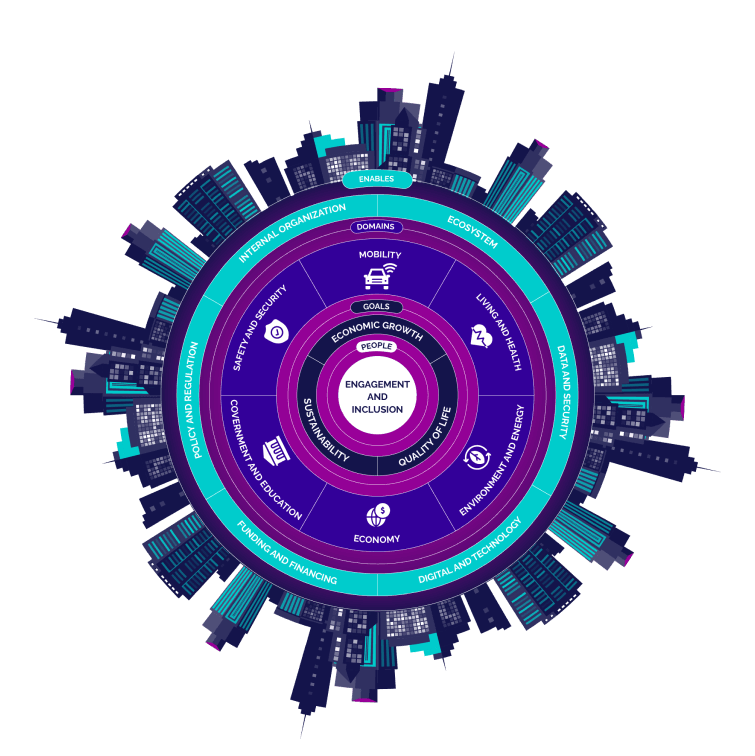
Cities contribute to four-fifths of global GDP and are actively securing an inclusive, safe, productive, sustainable, and resilient future for humanity, working across borders to address socio-economic and educational policies. In this context, artificial intelligence (AI) and artificial general intelligence (AGI) emerged as powerful drivers of the Fourth Industrial Revolution.
AGI and the need for a new ‘Magna Carta’
The digital revolution and its integration into the fabric of society in all its different agents: from families to educational institutions, to governmental agencies, to business organisations, is the greatest dynamic force in the world today.
The evolution of AI has already gone through two distinct stages and is today moving into a third. The first — from the pioneering computing efforts of Alan Turing during World War II until the late 1980s — was dominated by governments and academia. The second phase was the emergence of the tech powerhouse geeks and bigger than ever in history empire corporations Silicon Valley — “move fast and break things.”
The third phase we are now entering must bring the state and the wider public domain back into the picture. For a while, the positive breakthroughs of digital technologies — greater connectivity among like-minded peers or distant scholars, big data analysis of the genetic code, and the convenience of online shopping — took centre stage. But the negative aspects have proven to be profound, even though they took time to surface. They include threats to the very tissue of democracy itself — online movements have come to challenge or even displace mainstream political parties. These are emerging at the same time as what look like dramatic advances in machine learning.
When it comes to the fourth industrial revolution (4IR), we are now coming to foundational technologies that change everything as we know it. These technologies are more than just engineering tech and increasingly ideological tools and sets of solutions we can use for multiple 360 angles and, more than ever, in ideologies.
“Artificial intelligence is one of the most profound things we’re working on as humanity. It is more profound than fire or electricity.” —Sundar Pichai, 2020
Altogether, these are the most powerful tools ever created by humanity. These can redesign our evolutionary roads faster than ever. The question is:
- How are we going to use these tools?
- How can we use these technologies to create better and more efficient societies?
Bearing this in mind, the opportunity and also the challenges that we face are how we will use these very powerful sets of tools, particularly Artificial General Intelligence (AGI). AGI represents a form of artificial intelligence that can understand, learn, and apply knowledge across a wide range of tasks—much like human intelligence. Unlike current AI, which is task-specific, AGI has the potential to adapt to new challenges without needing human intervention.
To deal with these opportunities and challenges, we need to build a new human society narrative - a blockchain, AI-driven, new constitution for humanity. We need to develop what we call a new social impact Magna Carta Matrix for our disrupted world and our communities and cities.
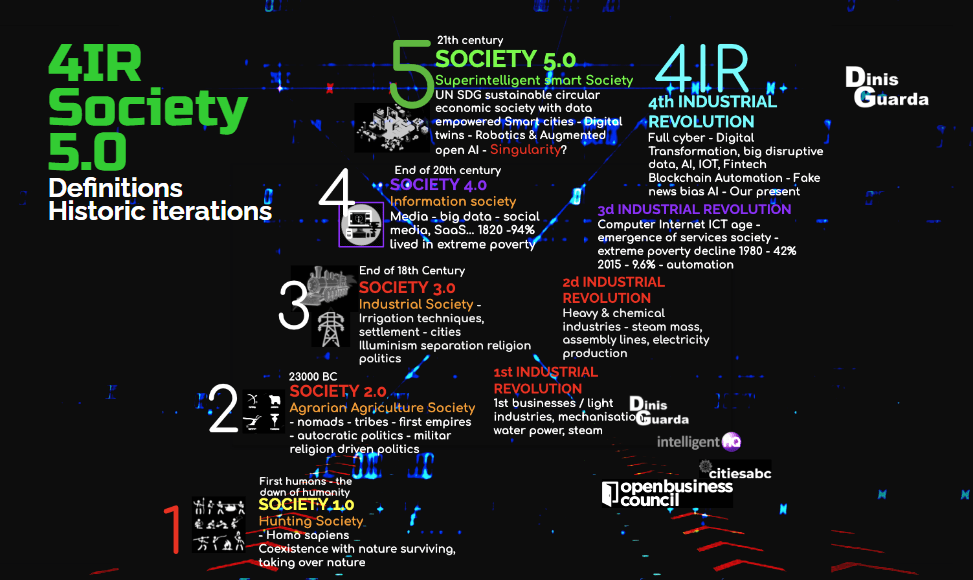
The Magna Carta Matrix: A practical manifesto
To navigate the complexities of the AGI era, we need a practical manifesto that integrates ideas and technology. This new Magna Carta must focus on four core values:
- Empowerment Identity and education- A new self-development model that includes ownership and personal empowerment with new models to quantify self-data).
- Economic and Financial models- Are built around a new circular economic and Sustainable Supply Chain lifestyle (including Social Impact, Track, Trace and Provenance).
- Healthcare and wellness paradigm- That enables humans to build a symbiotic relationship with their peers and nature.
- P2P Value Creation based on work having a meritocratic gamification angle- Transfer reward system (that redesigns and resets the global Payments and Finance mechanics).
These values must be contextualised within 10 key societal sectors, including:
- Financial Services & Capital Market
- Healthcare systems and infrastructures
- Business enterprise solutions
- Digital Identity & Government
- Business Processes Law & Insurance
- Supply Chain
- Retail and fashion
- Energy and environment - green energy
- Sustainability & Social Impact
- Wellbeing, Sports, Arts & Media
The digital revolution, driven by AI and AGI, touches every aspect of life, from families to businesses, creating both opportunities and challenges. The development of AI has passed through distinct stages, and we are now entering a critical third phase where the public domain must be re-engaged.
Blueprint for ethical AI: A framework for the future
To answer these questions, it is essential to foster public debate and create awareness, especially within education organisations. The main elements of this new Magna Carta-style blueprint should include the following principles for AI and AGI development:
- Development for the common good of humanity
- Operate on principles of intelligibility and fairness, ensuring users understand how their data is used
- Respect for identity and privacy
- Grounding in educational reform, with teaching that incorporates AI-AGI tools while fostering critical thinking
- No release of AGI without proper frameworks to measure consequences and ensure no harm is done
These principles should form the foundation of a cross-sector AI code to be developed nationally and internationally. A key aspect is breaking the monopoly of digital corporations on data, giving individuals greater control over how their data is used. Governments like the UK have already begun to adopt ethical data-sharing practices, such as creating data trusts.
The restructuring of the NHS, for instance, highlights the need for a balance between privacy and the use of patient data for research. This approach should also involve citizen representation. On the geopolitical front, issues such as fake news and AI weaponisation by other nations, including Russia and China, must be addressed through international agreements on AI ethics.
Global leaders from business, academia, and government must come together to create a unified framework for the ethical development of AI. The advantages of digital transformation are immense, but as with any technological revolution, the focus must be on harnessing innovation for good while managing its risks.
This is the time to draft a bold AGI Blueprint Magna Carta—a charter that protects citizens' rights while guiding the responsible use of technology. As we approach 2024, finding a balance between technological advancement, economic growth, and societal well-being is essential. A modern Magna Carta must ensure that new technologies benefit everyone and contribute to the health of the planet.


