

Fashion Events, Fashion Industry, resources
Fashioning Masculinities
Alessandro Michele,André Leon Talley,Claudia Schiffer,fashion,Harry Styles,Linda Evangelista,Ludovic de Saint Sernin,menswear,ralph lauren,versace,womenswear,Yves Saint Laurent
06 May 2022

The Victoria & Albert Museum in London recently opened its doors to ‘Fashioning Masculinities’, an exhibition on the art of menswear. Running until 6 November 2022, it chronicles the development of male fashion from Antiquity to the present day, touching as much on the concrete (cut, form, colour) as on the abstract (gender, performance, class). Perhaps the most capacious exhibition of its kind ever curated, it hails a shift in the cultural mindset. Calling into question the sartorial category of gender, ‘Fashioning Masculinities’ galvanises a more fluid, contemporary attitude to clothing, with individuality at its core.
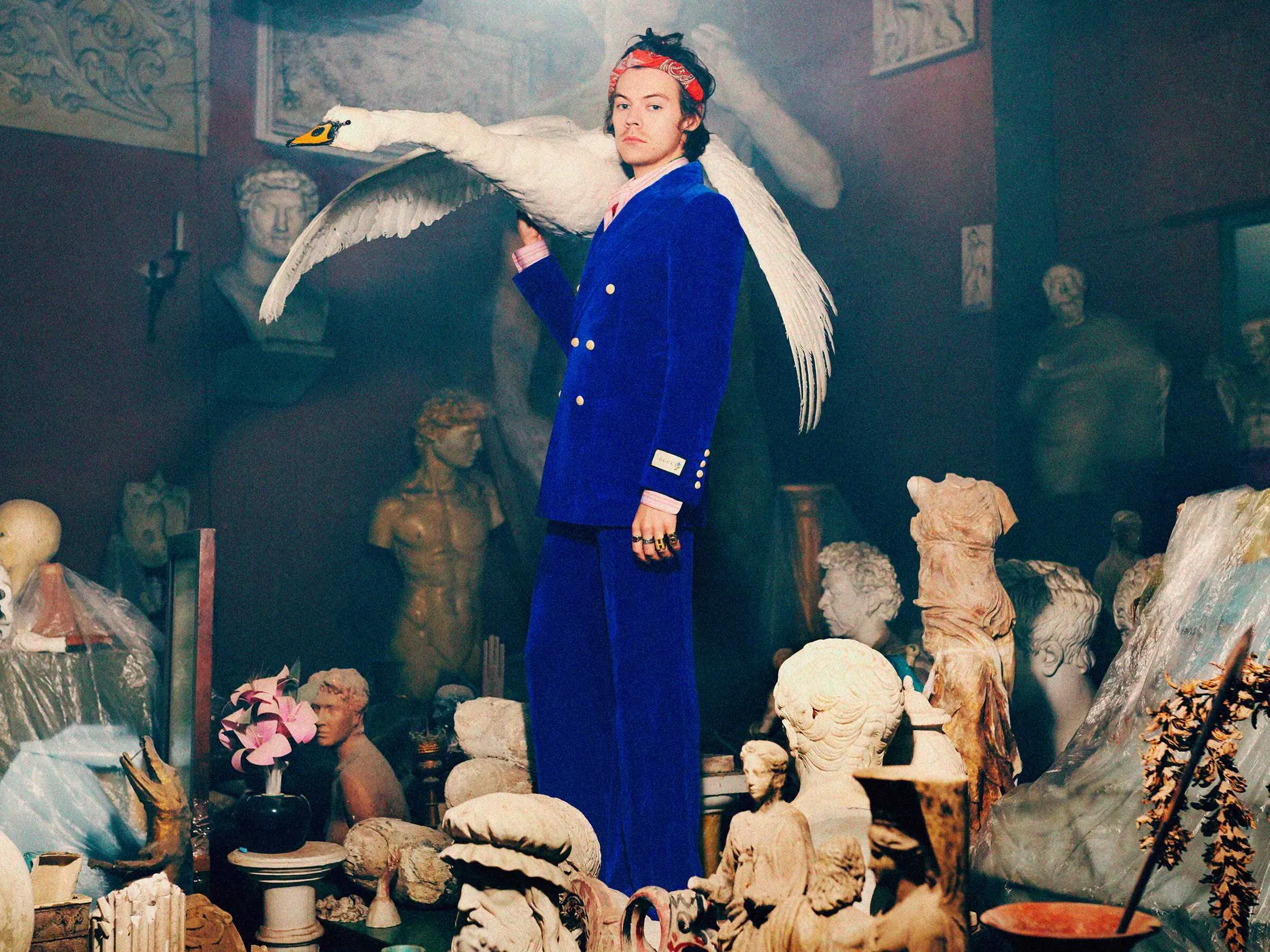
Photography: Harmony Korine. Courtesy of Gucci.
From the outset, ‘Fashioning Masculinities’ establishes a dialogue between fashion design and classical civilisation, teasing out the traditional male ideal of the robust, virile Greek hero, and exploring its relevance through to the modern day. The V&A’s permanent collection plays host to many sculptures edified in this tradition – most famously a replica of Michelangelo’s David – and feels like the perfect place to kickstart a nebulous conversation about the masculine physique. Juxtaposing scientific sketches of the male body by Leonardo Da Vinci with videos of professional ballet dancers leaping and bounding in figure-hugging viscose, it sets up a key dynamic between flexibility and rigidity. The ideal male body is both muscular and supple, strong and nimble. The eligibility criteria for this coveted physical status is more rigid still, leaving little leeway for digressions and alternatives.
The heroic ideal has been continuously exploited and weaponised by cultures striving for purity through physical (and racial) homogeneity – Nazi Germany being the most potent example. But all things rigid are also ripe for subversion, as shown in ensembles by Ludovic de Saint Sernin, Virgil Abloh and JW Anderson, assembled to recall the Three Graces besides a Greek statue. The sheer fabrics like organza and taffeta, usually reserved for womenswear, are refitted onto male bodies through provocative, androgynous designs. Anderson plays on the camp motif of the flower while Abloh refashions bubble wrap into a shirt. Contemporary menswear simultaneously highlights the masculine ideal through more transparent and revealing clothes for the supple, muscular man, and overturns it by drawing on feminine patterns and styles.
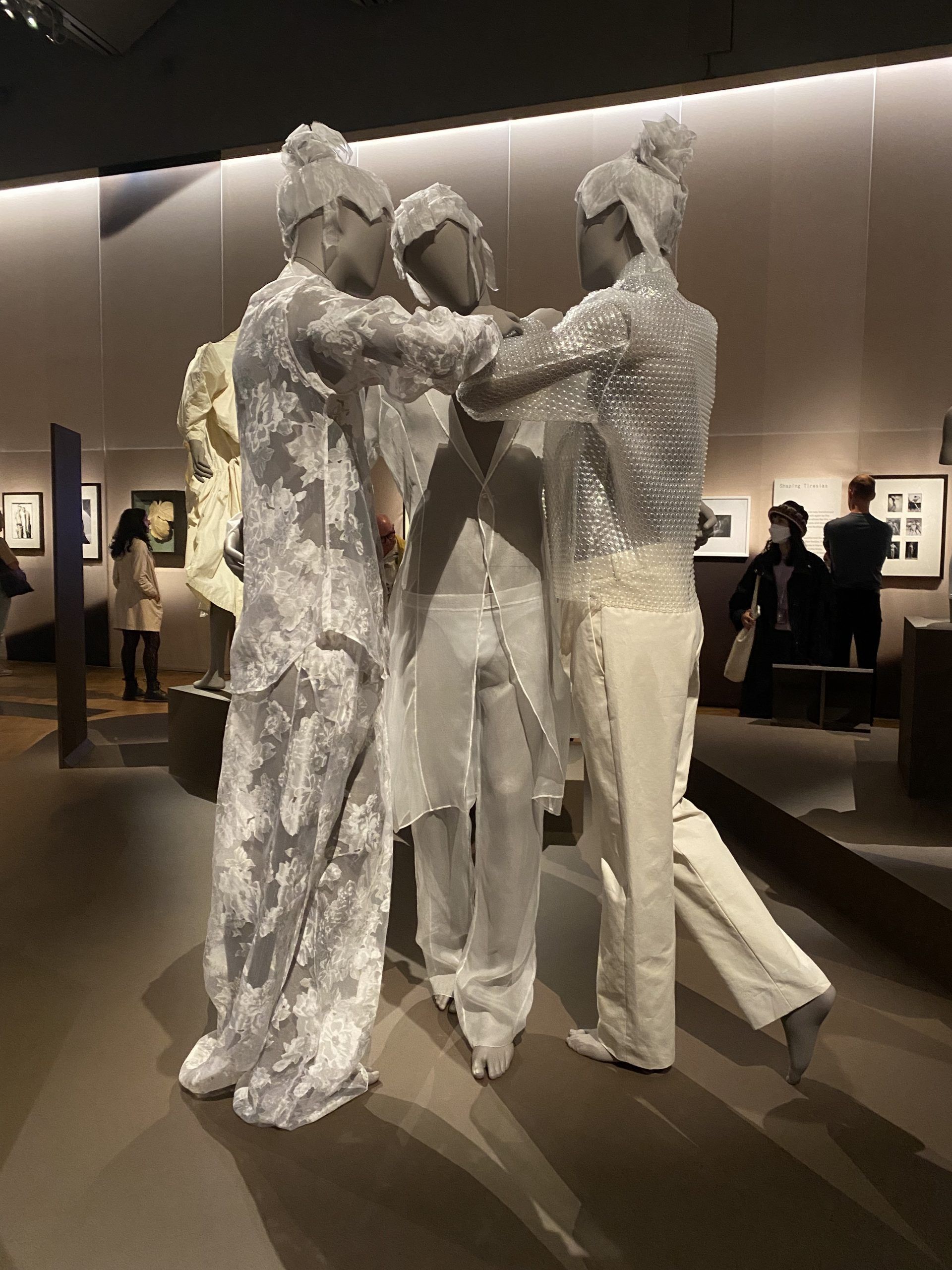
Left: JW Anderson. Middle: Ludovic de Saint Sernin. Right: Virgil Abloh.
The exhibition continues down a corridor to explore medieval military armour and its influence on contemporary fashion for men and women alike. One of the more recent looks pulled from the archives is a black Versace coat from the infamous ‘Miss S&M’ collection, AW 1992, modelled on the runway by Linda Evangelista. Subsequent ensembles explore the history of capes, which were given a second lease of life in the last fifty years by André Leon Talley. Paying homage to the former Vogue creative director, Lizzo attended the 2022 Met Gala in a Thom Browne cape elegantly draped over her shoulders.
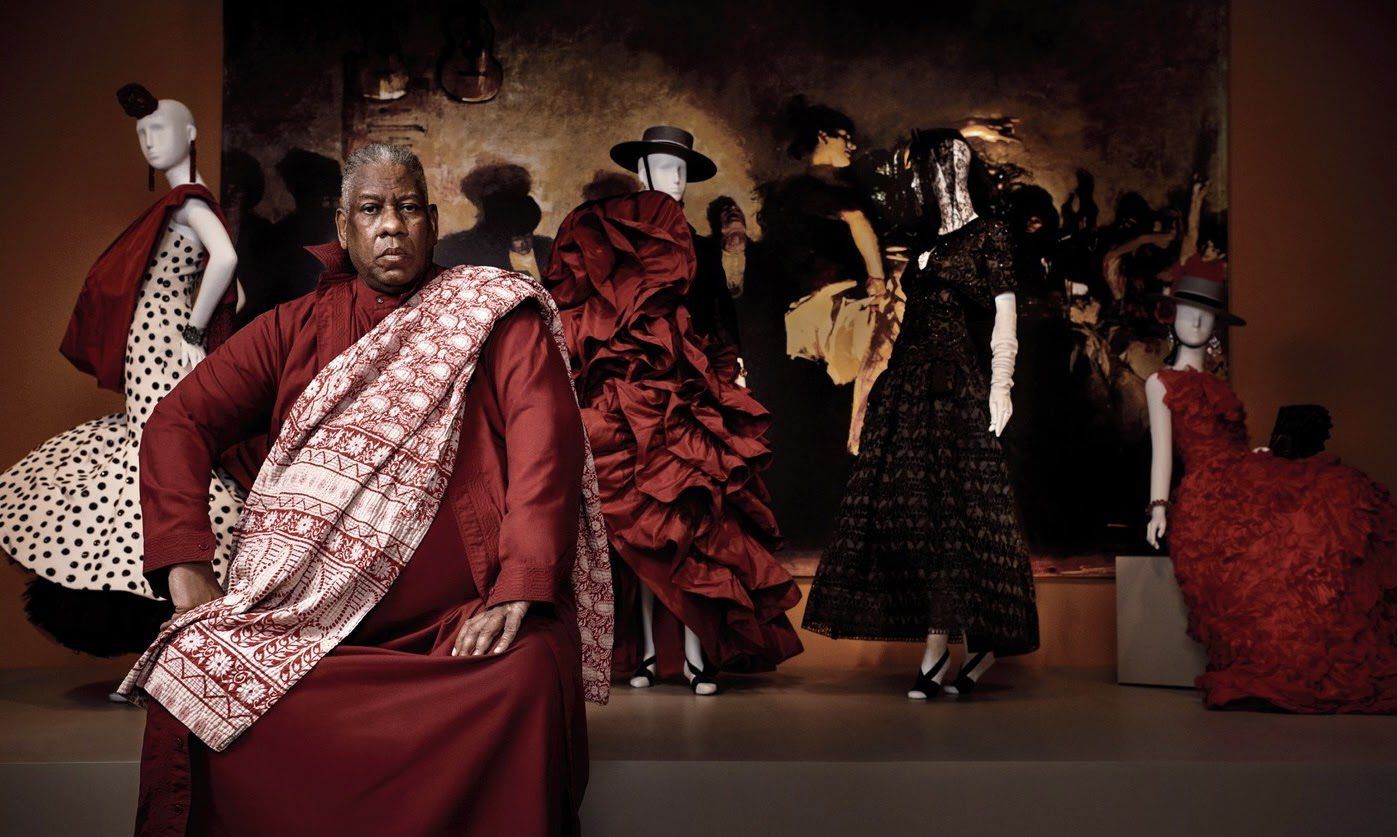
André Leon Talley. Source: The Hilltop.
The exhibition becomes more interesting when the theme turns to colour: the third room explores the use of pink in menswear. Historically a masculine colour, its camp connotations only began to appear in the twentieth century. Previously, pink had been a symbol of wealth: as with red, natural dyes were expensive and had to be imported from the Indies. The exhibition is at its strongest when it brims with colourful historical nuggets. Black, we learn, first became fashionable in fifteenth century Spain, and exported to the upper echelons of British society through Baldassare Castiglione’s Book of the Courtier. Yellow – the colour of Chinese royalty – became popular in the nineteenth century when the European obsession with the Orient was at its peak. Purple – the colour of Roman decadence – has denoted wealth and debauchery ever since.
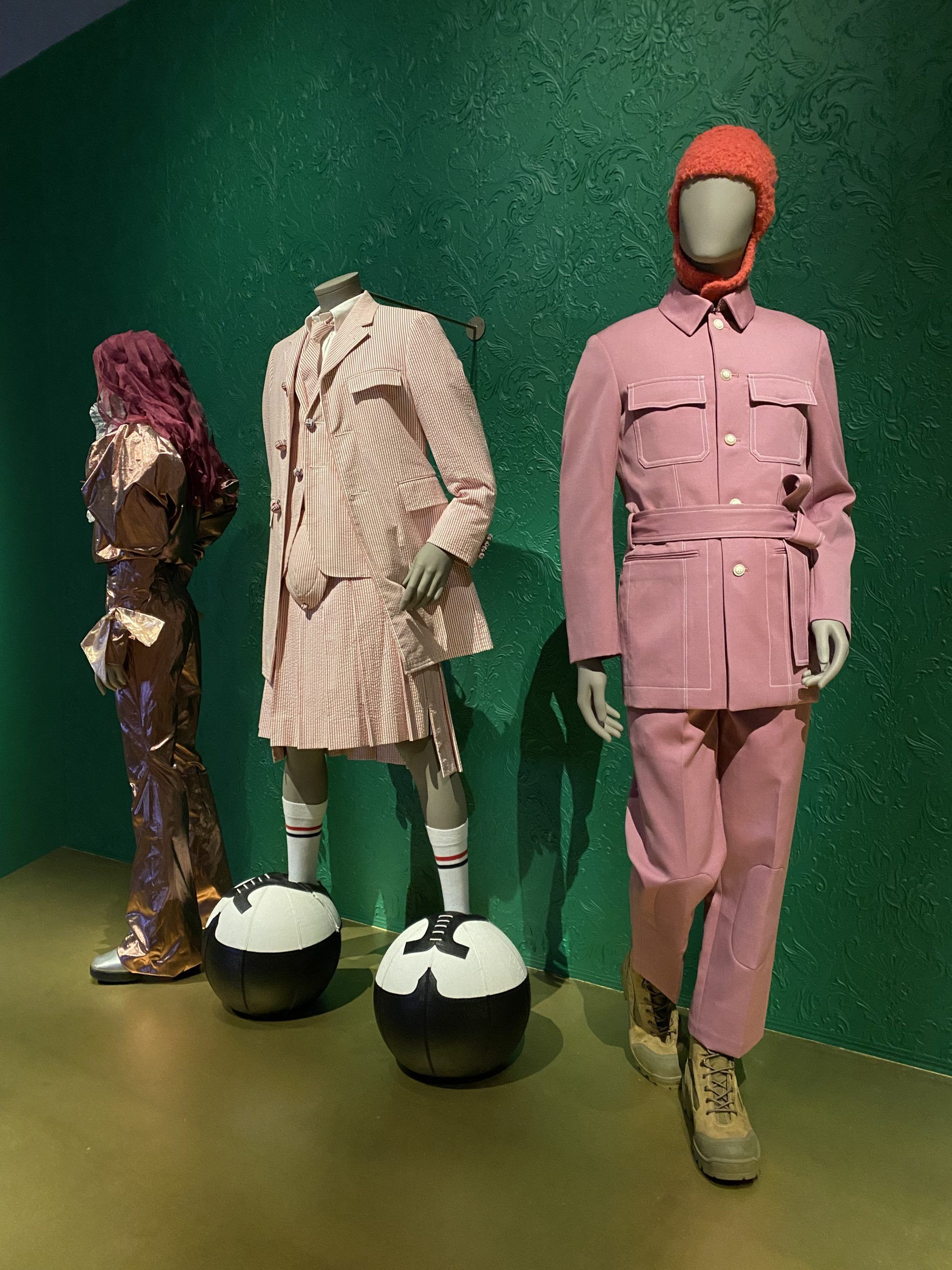
Selection of pink menswear ensembles.
The symbolic potency of colours extends to patterns, too. A section playfully entitled ‘Queer Botany’ explores the significance of flowers as identity markers and subversive statements. The exhibition juxtaposes paisley shirts with more experimental designs, including an ensemble by Odebayo Oke-Lawal for Orange Culture that pioneers a softer approach to male attire, adapting the vivid hues and floral motifs of the Roselle hibiscus, native to West Africa.
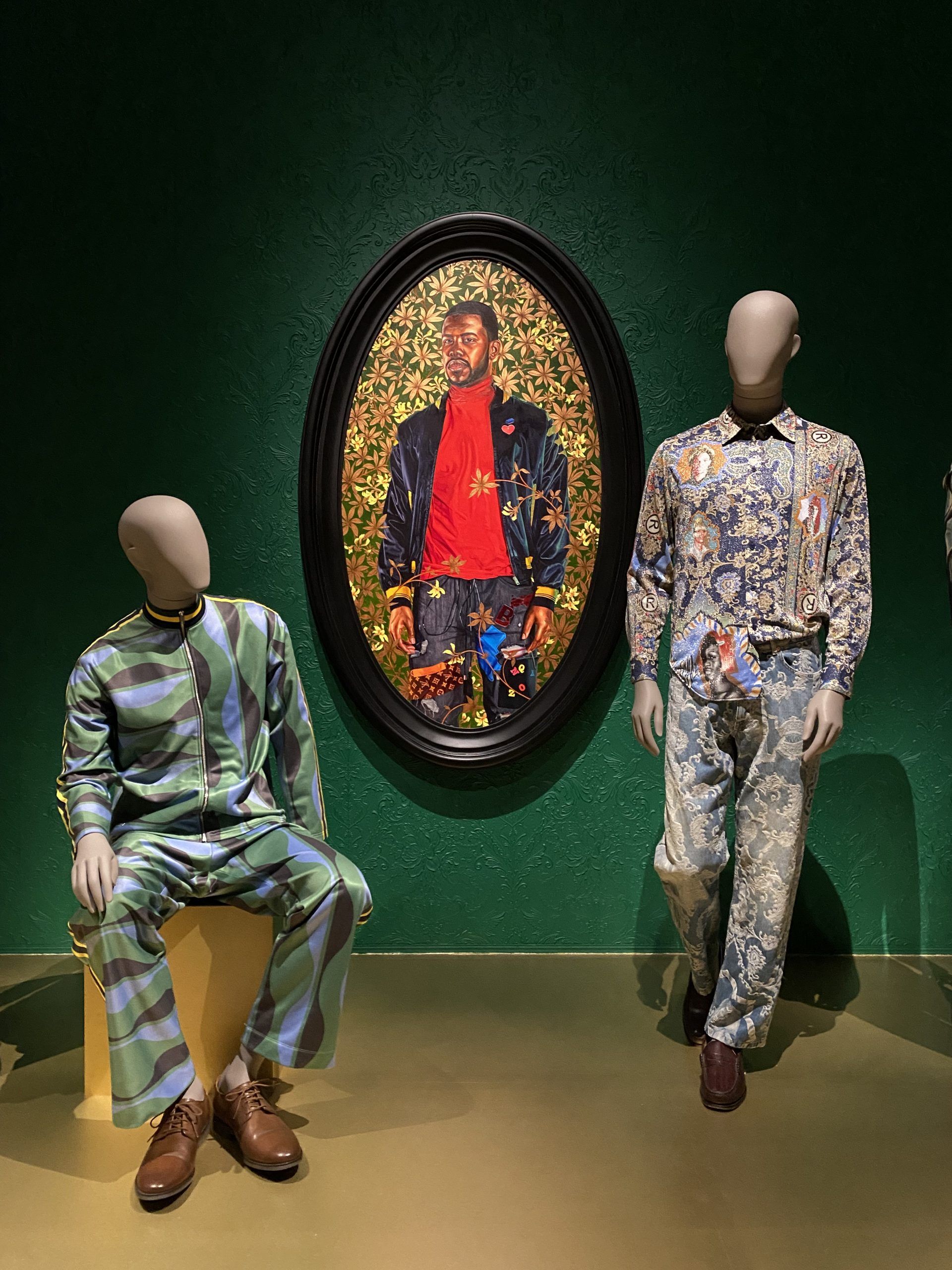
Left: ensemble by Odebayo Oke-Lawal for Orange Culture. Middle: ‘Alexander Cassatt’ portrait by Kehinde Wiley. Right: ensemble by Ahluwalia Studio
The surviving artefacts featured in this exhibition are quite extraordinary, including such storied ensembles as the navy uniform worn by Officer Nelson – altered to fit his lithe, one-armed frame – and a green checkered suit worn by Edward, Duke of Windsor. The latter is presented alongside vintage tailcoats and waistcoats, signalling a period in history when these items became the gentleman’s uniform. The influence of this new masculine archetype (British, upper class and unapologetically posh) continues to appear in the works of Ralph Lauren and Alessandro Michele, both of whom are included in the exhibition for comparison.
Impressive and creative as these ensembles may be, our eyes are more readily drawn to the lateral walls of the penultimate room, dedicated to the most classic and timeless of men’s designs: the overcoat and the black suit. From beautifully preserved dusters dating back to the 1910s, to Raf Simons’ radical rendering of the black coat as a pontiff’s robe for the fashion forward set, this section is perhaps the most poignant illustration of fashion’s capacity to transform not only people, but itself. The suits are even more interesting, featuring archival looks worn by German actress Marlene Dietrich in her 1930 film, Morocco, and supermodel Claudia Schiffer for Yves Saint Laurent AW 1996. No exhibition on fashioning masculinities would be complete without the revolutionary womenswear of the last century, which called into question the relevance of gendered clothing long before Harry Styles was posing in a dress for the cover of American Vogue.
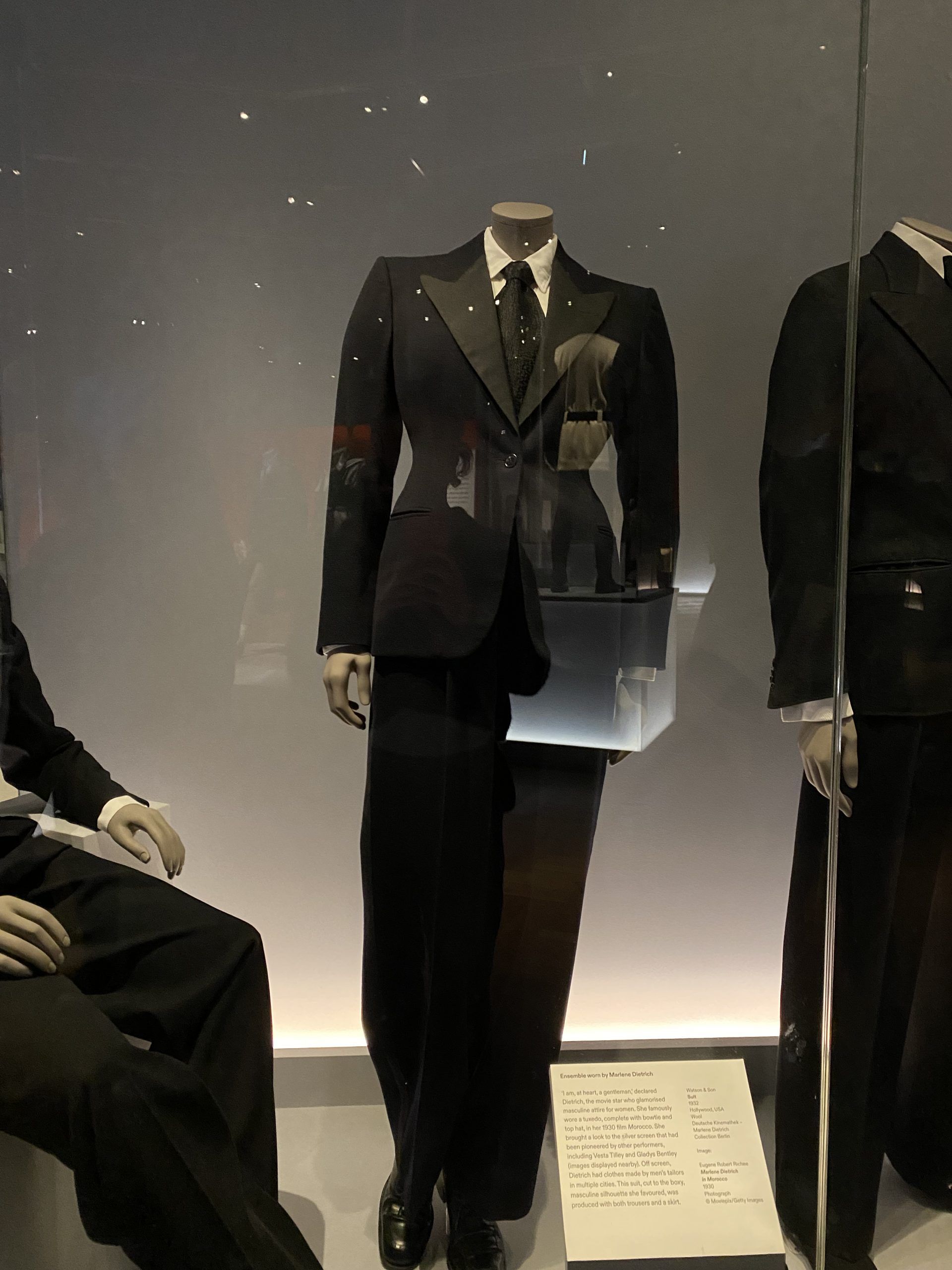
Marlene Dietrich’s suit from Morocco (1930).
Styles’ dress does appear in the final room, against an electric blue backdrop of drag queens on film, and alongside Billy Porter’s black dress worn to the 91st Academy Awards in 2019. It rounds off a sensitively curated exhibition with a touch of gauche glamour, befitting the contemporary challenge to gender-normative sartorial paradigms occurring both within the fashion industry and beyond. We are left feeling somewhat bewildered, and no doubt a little sad about our own wardrobes. But more importantly, we feel inspired and more certain than ever of fashion’s capacity to transform identities and reflect the times we live in.


