

innovation, news, resources
A Legal Showdown: The New York Times Takes on Tech Giants In AI Copyright Dispute
04 Jan 2024

The New York Times has initiated a lawsuit against tech giants OpenAI and Microsoft. This lawsuit raises crucial questions about the ethical use of Artificial Intelligence (AI) and the AI copyright laws.
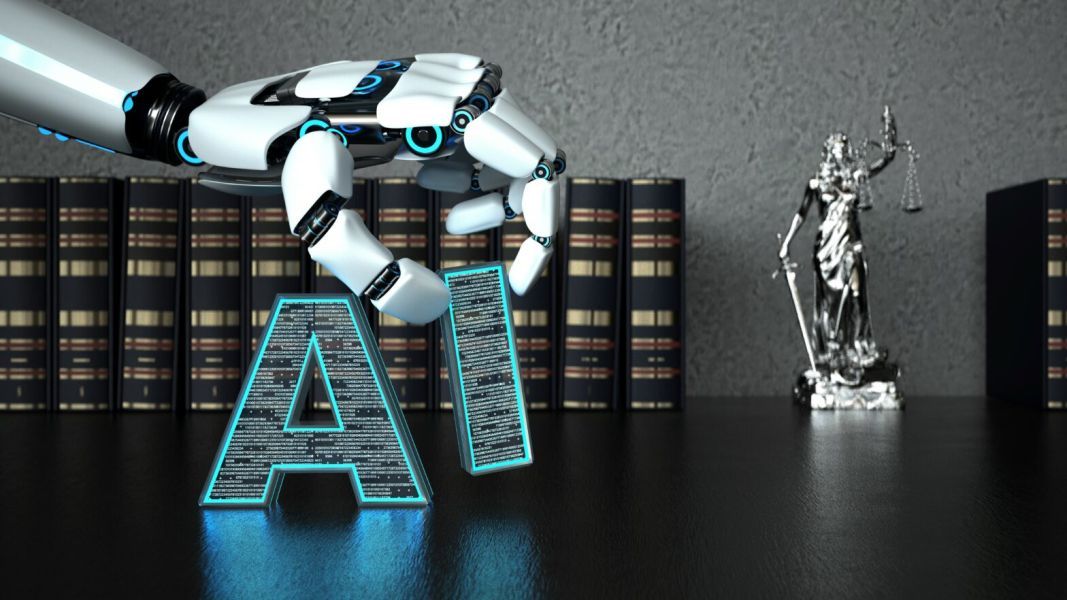 A Legal Showdown: The New York Times Takes on Tech Giants In AI Copyright Dispute
In a legal saga, with capability to reshape the ethical contours of the Artificial Intelligence (AI) landscape, The New York Times has launched a lawsuit against industry heavyweights OpenAI and Microsoft. The lawsuit alleges that OpenAI’s ChatGPT and Microsoft’s Bing Chat have illicitly harnessed The New York Times’ content to train their AI systems, delving into the complex realm of AI copyright.
Copyright is a legal concept that provides the creators of original works exclusive rights to their creations, granting them the authority to control how their work is used by others. This protection applies to various forms of creative expression, including literary works, music, art, and software. Copyright ensures that creators have the right to reproduce, distribute, perform, display, and adapt their works.
“It turns out that copyrighting is kind of an anti-thesis of the sharing world. Copyright is based on the idea that if you want to make a copy of something, you have to ask permission for every single copy”, said Glynn Moody in a recent citiesabc interview with Hilton Supra.
What is meant by AI Copyright?
As AI technologies become integral to content creation, distribution, and consumption, questions surrounding intellectual property rights have assumed unprecedented complexity. The intersection of machine learning algorithms, neural networks, and decentralised technologies are blurring the lines between human and AI-generated content.
AI Copyright laws are grappling with the challenge of adapting to this new paradigm, where algorithms autonomously generate creative works, giving rise to a host of legal considerations.
Speaking of the recent lawsuit by The New York Times, Chelsea Alves, a Consultant at UNmiss shares:
“The timing of these legal challenges is pivotal, considering just how much of a force the AI industry is to reckon with at the current moment, with companies like OpenAI potentially valued at over $80 billion. Additionally, AI stocks see massive interest aligning with continuous advancements across numerous large-name corporations such as Tesla, Lantheus, and Cerence. Investors are now closely watching how the legal landscape unfolds, as questions about intellectual property rights could significantly impact the industry’s competitive landscape.”
The current state of AI copyright laws
A crucial aspect under scrutiny is the “fair use” doctrine in intellectual property law. This doctrine allows creators to expand upon copyrighted work if they transform the content substantially and do not compete directly in the same market as a substitute for the original work.
Legal experts highlight that while fair use principles are well-established for traditional media, the application of AI tools is a gray area. Ryan Abbott, a lawyer at Brown Neri Smith & Khan, points out, “There isn’t a clear answer to whether or not in the United States that is copyright infringement or whether it’s fair use.”
As The New York Times and other content producers continue to face ongoing copyright issues, it remains to be seen whether the lawsuits will reach trial or if they’ll provide definitive answers for whether AI is indeed infringing on copyright laws or if they will serve as the foundation for laws to come to protect creators’ work.


